Discover the Future of AI & Technology
Explore the latest breakthroughs in artificial intelligence, robotics, cybersecurity, and future innovations. Stay informed with expert insights and cutting-edge technology updates.
Our Information on AI & Technology

Artificial intelligence, or AI, is a deal in the world of technology. It has changed the way people live, work, and interact with each other. AI is not something you see in movies anymore. It is a thing that is used in many everyday things like smartphones, online shopping, and GPS navigation.
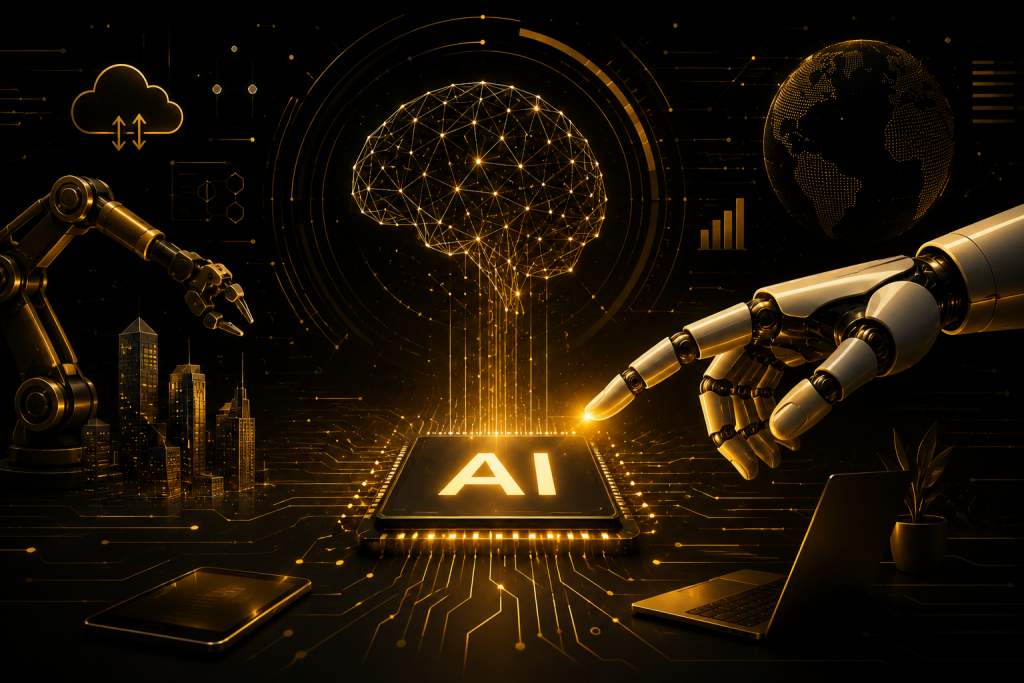
Technology has always been important for progress. From the wheel to the internet, each new technology has changed the world in ways. Now AI is the step in this process. It allows machines to learn, think, and make decisions like humans do. When you combine AI with modern technologies like cloud computing, robotics, and big data, you get something really powerful.
As AI keeps getting better, it is going to bring a lot of benefits. It also raises some important questions about things like ethics, privacy, and job security. That is why it is so important to understand what AI is and how it works.
Understanding Artificial Intelligence
Artificial intelligence is a type of computer system that can do things that normally require intelligence. These things include learning, thinking, making decisions, and solving problems.
AI systems are different from computer programs. They can look at data, find patterns, and get better at what they do over time. This means they can adapt to situations and make pretty accurate predictions.
There are important types of AI:
Machine learning is a type of AI that lets computers learn from data without being told what to do. It is used in things like recommendation systems, fraud detection, and predictive analytics.
Deep learning is a type of machine learning that uses networks, which are like the networks in the human brain. It is used in things like speech recognition, image classification, and self-driving cars.
Natural language processing is a type of AI that lets computers understand and generate language. It is used in things like translation services, chatbots, and virtual assistants.
Computer vision is a type of AI that lets computers see and understand images and videos. It is used in things like imaging, facial recognition, and security systems.
Robotics is a type of AI that lets machines do tasks. It is used in things like manufacturing, healthcare, and space exploration.
The Evolution of AI
The idea of AI has been around since the 1950s. It wasn’t until recently that AI started to become really useful. This is because we now have a lot of data and powerful computers that can process that data.
Today AI can do things like recognize speech, translate languages, create art, and help doctors diagnose diseases. It is used in different areas, including business, healthcare, and education.
AI & Technology in daily Life
You probably use AI every day without even realizing it. Your smartphone uses AI for things like recognition and predictive typing. Online shopping platforms use AI to recommend products you might like. GPS navigation systems use AI to find the fastest route to your destination.
Banks use AI to detect transactions and prevent fraud. Email providers use AI to filter out spam messages. Social media platforms use AI to personalize your feed.
AI in Healthcare
AI in healthcare is increasingly adopting AI more and more in healthcare. It can help doctors diagnose diseases by looking at images like X-rays and MRIs. It can also help predict outcomes and optimize treatment plans.
Hospitals use AI to manage resources and make sure patients get the care possible. Wearable devices use AI to track things like heart rate and sleep quality. AI can even help discover new medicines by analyzing large amounts of data.
AI in Education
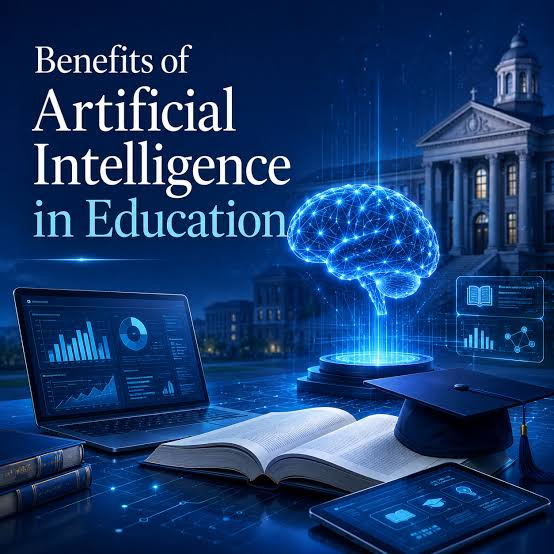
AI is changing the way we learn. AI-powered learning platforms can personalize lessons for each student. Instead of using a one-size-fits-all approach, these platforms adapt to each student’s strengths and weaknesses.
Teachers can use AI to automate grading and track student progress. Language learning apps use AI to help students improve their pronunciation. AI-powered tutors can provide instant feedback and practice exercises.
AI in Business
AI is being used in different areas of business. Customer service chatbots can answer questions and help customers 24/7. Marketing teams use AI to analyze consumer behavior and create ads.
Retailers use AI to forecast demand and manage inventory. Financial institutions use AI to evaluate credit risk and detect fraud. Manufacturing companies use AI-powered robots to improve production efficiency.
AI in Transportation
AI is making transportation smarter. Navigation systems use AI to find the route and avoid traffic. Autonomous vehicles use AI to detect obstacles and make driving decisions.
Airlines use AI to optimize flight schedules and reduce fuel consumption. Public transportation systems use AI to improve scheduling and reduce congestion.
AI and Cybersecurity
As we use more technology, we need to make sure it is secure. AI can help with this by monitoring network activity and detecting behavior.
Machine learning algorithms can detect malware. Phishing attempts faster than traditional security systems do. AI can help automate threat detection and response.
AI and the Internet of Things
The Internet of Things, or IoT, refers to the network of devices that are connected to the internet. AI can enhance the IoT by allowing devices to analyze information and make decisions.
Smart homes use AI to control lighting, temperature, and security systems. Factories use AI-powered sensors to predict equipment failures. Agricultural systems use AI to monitor soil conditions and crop health.
Benefits of AI
AI has benefits. It can improve efficiency by automating tasks. It can enhance accuracy by reducing error. It can support decision-making by analyzing large amounts of data. It can improve customer experiences by providing recommendations. It can drive innovation by enabling breakthroughs in science, medicine, and engineering.
Challenges and Risks
While AI has benefits, it also presents some challenges. One of the concerns is job displacement. As AI automates tasks, some jobs may become obsolete.
Another concern is privacy. AI systems often rely on large amounts of personal data, which can raise concerns about how that data is collected, stored, and used.
Bias in AI algorithms can also be a problem. If the data used to train an AI system is incomplete or biased, the system may produce outcomes.
Then there are the cybersecurity risks. As AI systems become more connected to infrastructure, the potential for cyberattacks increases.
Ethical AI
As we develop and use AI, we need to make sure it is ethical. This means being transparent about how AI systems work and making sure they are fair and unbiased.
Developers should prioritize user privacy and security. Organizations should regularly evaluate AI performance to identify potential biases and unintended consequences.
The Future of AI and Technology
The future of AI is exciting. Scientists are working on AI systems that can help with climate research, disease prevention, and renewable energy optimization.
Healthcare may become more personalized with AI-assisted diagnostics and treatment recommendations. Education may evolve into adaptive learning environments. Businesses will continue to use AI to automate operations, improve customer experiences, and drive innovation.
AI and Automation
AI and technology are changing the world. They are bringing benefits but also present some challenges. As we move forward, it is essential to understand AI and its relationship with technology. We must prioritize ethics, transparency, and accountability in AI development. We must work together to ensure that AI benefits society as a whole.
Artificial intelligence is really changing the world. It is making an impact on many areas of our lives. Artificial intelligence is helping us in healthcare, education, transportation, finance, cybersecurity, and scientific research. Artificial intelligence is doing all of this at a fast pace.
We have to think about some issues. These issues are about ethics, privacy, security, bias, and how artificial intelligence is changing the workforce. We need to be careful and think about how we use artificial intelligence. We need to make sure that artificial intelligence is used in a way that’s good for people. This means we need to have rules and make sure people know how to use artificial intelligence.